_
Showing posts with label books. Show all posts

Wednesday, April 30, 2014

What to read when you’re expecting

So I know I haven't mentioned this... but I'm not the only pregnant woman in my family.

There's another pregnant lady around these parts... and she looks suspiciously like me.


Yes, that's right! My twin sister Lillian is also expecting. And she's due in just three weeks! (Although apparently due dates don't mean much in our family.)

Finding out Lil was pregnant too was one of the best things that's ever happened to me. We are loving going through our pregnancies together. We're both so excited to become aunts as well as mothers, and we can't wait for our babies (who we call "the little twin cousins") to be the best of friends.

You can't imagine how long I've been dying to tell you guys. I've been begging her to let me share the news on here, and she finally gave the OK... just in time for her first guest post!


Lillian's read more books about pregnancy than anyone I know. She's read even more than I have, and that's saying something! So I was thrilled when she agreed to share a list of recommendations for her favorite pregnancy reads. Here are her thoughts on "what to read when you're expecting," and I've added my own thoughts/comments in italics.

What to read when you’re expecting

A Pea in the Pod
This was one of those enormous, helpful one-size-fits-all compendia on pregnancy, labor, birth, and infancy. I’m sure your library carries similar tomes. It’s the kind of book that a super-curious mom-to-be like myself would have loved in the pre-Internet age, but now that I can Google questions like “what is round ligament pain?,” a book like this is a lot less necessary. It provides a nice general overview, but nothing you can’t get elsewhere.

What to Expect When You’re Expecting
This is the big mama of all maternity books, and like A Pea in the Pod provides helpful general advice. I personally love weekly pregnancy updates and enjoyed getting them from several Internet sources throughout my pregnancy. WTEWYE provides those in book form but, again, it’s nothing you can’t get online. I suppose for a total beginner to the topic of labor and birth, this book provides a helpful general guideline, but it’s really not as essential as its “classic” status would suggest. I did find the 2012 movie version to be quite entertaining, however, although I wouldn’t recommend it until you hit month 7 or 8—the pregnancy jokes will be a lot funnier and more relatable when you’re further along.

Ina May’s Guide to Childbirth
Embrace your inner earth mama. This hippie classic is great if you want to get psyched for a natural, drug-free birth. The book is filled with personal stories (some of which are graphic) and a few pictures (not for the squeamish) and is also full of zen mamas with uplifting if somewhat sappy birth tales (along the lines of “My baby was born with the sun, as a light mist rose over the mountains and enveloped us with its aura.  We named the baby Whisper”). Ok, that may be an exaggeration, but not by much.  It’s an informative read but the average reader may want to take some of it with a grain of salt.

Note from Tess: I adored Ina May's book and found it fascinating and comprehensively informative. I would rank it as one of my favorite pregnancy books—but I think I'm a lot more of a hippie than Lillian is. 

Your Best Birth
I found this book to be somewhat over-hyped. The author Ricki Lake’s movie, The Business of Being Born, is a cult classic for natural birth proponents, so I expected a more educational read. Instead I found a surprising amount of sappiness—I was literally instructed to “embrace my inner Birth Goddess.” The book argued against having medical interventions in birth, which I found a little disingenuous in a book that styled itself as objective. It also came with the distrust of the medical community that marked—some would say marred—The Business of Being Born. Maybe it’s just because my dad’s a doctor, but I don’t think the medical community is out to get pregnant ladies as much as the authors seemed to think. This book is a nice introduction to natural birth, but it’s not the first book I would recommend.

Note from Tess: Your Best Birth was my single favorite pregnancy book. I thought it gave an awesome introduction to birth in general and natural birth in particular, while still being open-minded and fair to other alternatives. But again, I'm the hippie of the two of us. :)

The Birth Partner
If you read one labor book, READ THIS.  It was my hands-down favorite.  It is aimed at the father-to-be, doula, or labor coach but is so informative and helpful that I recommend it for the expecting mama as well.  Because it is geared towards supporting the laboring mom, this book offers lots of very specific coping mechanisms for every stage of labor, complete with diagrams and illustrations of procedures and positions.  It contains everything you need to know for labor in one book, and then some, including possible emergency scenarios.  Unlike, say, “Your Best Birth,” this book admits that medical emergencies can happen or even that you may voluntarily choose an epidural, and then gives you information and tools to handle anything that childbirth might throw at you.  It is truly objective, highly educational, easy to read, and presents all the possible scenarios in a calm and helpful way.  It is also, in my opinion, the best and only book that your husband or labor coach needs to read. 

The Womanly Art of Breastfeeding
If you want to read 800 pages on breastfeeding then you—like me—may be a birth nerd.  I actually read through this whole book, cover to cover.  Luckily, that is NOT necessary to gain some wisdom from its exhaustively informative pages.  This book is divided helpfully into sections on various topics of relevance to women in different situations (ex: breastfeeding an infant when you are still breastfeeding a toddler; breastfeeding twins; common breastfeeding problems; etc.) so you can pick and choose which sections you feel you need to read.  It’s really not necessary to read the whole thing, but I think that at least a few of the sections would be helpful to any expecting mom.  If nothing else, this book left me with a warm feeling towards the super-supportive La Leche League community and made me feel comfortable reaching out to LLLI members in my area if I need extra help when I start to breastfeed.

And just for fun, these are my (Tess's) favorites...

Favorite comprehensive "pregnancy bible": The Mayo Clinic Guide to a Healthy Pregnancy

Favorite pregnancy memoir: Great with Child 
This series of letters addresses the worries and fears that attend pregnancy while also celebrating the joy of motherhood. And it was written by a Notre Dame grad, woohoo! More about it here.

Favorite book for pregnancy's spiritual side: A Catholic Mother's Companion to Pregnancy
This book offers such a great sense of sisterhood as it walks you through pregnancy with beautiful prayers and reflections. Thank you to Serena for sending me this awesome one!

Favorite lighthearted pregnancy book: The Girlfriends' Guide to Pregnancy
This tongue-in-cheek memoir is a little silly but a lot of fun, and it definitely helped me feel like I wasn't alone in navigating this crazy pregnancy journey.

Favorite book to encourage prenatal bonding: Hypnobirthing: The Mongan Method
I didn't expect this book to contain so much information about "what's going on in there," but I truly loved the ideas for bonding with your preborn baby. Awesome stuff.

Favorite book for your inner control freak: One Year to an Organized Life with Baby
This book sometimes made me freak out about being unprepared, but ultimately I found the ideas and suggestions so helpful. It really was chock-full of useful information.

Wow, I read a LOT this pregnancy! Geez. This is actually just the tip of the iceberg—I also read some other books about topics like breastfeeding and prenatal development—but I'll stop there before this list gets ridiculous.

So, if anyone made it all the way to the end of this post, I would love to know... what was YOUR favorite pregnancy book?

Thursday, April 10, 2014

What We're Reading ... Thursday?

Well guys, I decided to give you a break from posts about pregnancy and baby stuff. Because as much as I love those topics (and apparently can't talk about anything else these days!) I think maybe I need to remember that there are other things to talk about too. (Shocking!!)

I thought maybe we could talk about what we're reading. The books I'm currently reading are not exactly my new favorites. Actually, I'm pretty annoyed with both of them.

I'm almost done with The Sun Also Rises...

via
and I'm 1/3 of the way through the audiobook of Crime and Punishment (best part of my commute).

via
Have you read either of these? I find them both frustrating for different reasons. The Sun Also Rises is only my second Hemingway book, after A Moveable Feast. I loved Feast, but Sun isn't much like it. My main beef with Crime and Punishment is that I don't like any of the characters. Actually, I'd take that a step further and say I can't even stand any of them. Obnoxious group of people. (Come to think of it, I think that's the same reason I don't like Sun.)

I hope you're reading something you like better than I like these! Any recommendations for my next read after these? I'm thinking something light and enjoyable that I can read while nursing... time for some Jane Austen re-reads, maybe?

Thank you Jessica for hosting!

Tuesday, November 19, 2013

John Senior and the Integrated Humanities Program

I go on research binges every couple days where I learn EVVVVERYTHING there is to know about some random topic, and today I am obsessed with John Senior and the Integrated Humanities Program at the University of Kansas.

I've been secretly obsessed with the Pearson Integrated Humanities Program for a long time, ever since a friend told me all about it during our ISI fellowship.

This reflection on the program is so beautiful. I don't know anyone who was ever involved with the program, but so many things about it fascinate me.

The classes were presented as a conversation between great minds, rather than as a lecture. The students had to learn to LISTEN before they were allowed to contribute. Real, traditional dancing was part of the curriculum, as was beautiful music—folk songs, classical, and medieval chant.

Most of all I love learning about the great men who led the program. These three articles about its leader, John Senior, are my favorites:

http://www.crisismagazine.com/2012/john-senior-in-piam-memoriam

http://www.edocere.org/biographies/our_schoolmaster_remembered_dr_john_senior.htm

http://www.edocere.org/articles/magister_johannes.htm

Together, these give me so much to think about. The educational work of this awesome program has continued to bear fruit in later generations. It even inspired a new college based on the same principles.

I kind of want to be John Senior when I grow up.

Monday, August 5, 2013

House Becoming Home

Frank and I finally opened our joint bank account on Saturday. We had been putting it off because of the bar exam. What a great feeling!

We also got new phones on Saturday—our first time having smart phones, and iPhones to boot. I'm so excited to discover the seemingly-magical world of iPhones. I've already been a lot more active on instagram since getting the phones (my username is tessciv if you want to follow :) ). Any favorite apps to recommend?

Most of my photos will probably be from my iPhone instead of my camera from now on. Ironically that probably means they'll be better quality—my camera is a dinosaur.

On Saturday night we babysat for my parents and had Joseph and Angela over for a sleepover. They were so excited.


I love this age. A little sassy, but so sweet and eager to help.

They gladly borrowed our slightly-too-big-for-them aprons and did the dishes:


Best helpers ever.

They got into our books while Frank and I were finishing up cooking:


This photo is awful and blurry, but it's my favorite picture of the night. Because you can see a tiny glimpse of the home I'm trying to create. Shelves of books, a map on the wall, the red couch I've wanted since I was a little girl, and a family learning and growing together. It's still very much a work in progress, but I love seeing how we're getting a little closer to it, day by day. (And I love that we get to borrow those two little ones to be a part of it every now and then.)

Thursday, June 27, 2013

Poem Discussion: The Master Speed, "Wing to Wing, Oar to Oar"

Today I was in a meeting when I noticed this book on a shelf in the conference room. I've heard good things about the Kasses' anthology before, so I decided to Google it when I got back to my desk.

via

Imagine my delight to find that the title comes from a Robert Frost poem. (Frost is Frank's favorite poet, and we're both big fans.) The poem, The Master Speed, is addressed to a young married couple and discusses the nature of marriage. Since marriage is such a big topic around these parts (I wonder why...), I thought maybe you'd enjoy reading it:

The Master Speed

By Robert Frost

No speed of wind or water rushing by
But you have a speed far greater. You can climb
Back up a stream of radiance to the sky,
And back through history up the stream of time.
And you were given this swiftness, not for haste
Nor chiefly that you may go where you will.
But in the rush of everything to waste,
That you may have the power of standing still—
Off any still or moving thing you say.
Two such as you with a master speed
Cannot be parted nor be swept away
From one another once you are agreed
That life is only life forevermore
Together wing to wing and oar to oar.


There's so much to think about in this poem, isn't there? I love the line about "the power of standing still." I asked Frank what he thought that meant, and he said, "An anchor in a storm, that holds the boat steady—that's what a family is." Funny, because I thought more of time standing still, so that a couple could be 75 years old and still feel young to each other. I loved how different our interpretations were—it expands my mind to hear his perspective.

I liked this poem so much I wanted to read some analysis of it—something that would tell me its significance and what it means. But I couldn't find a whole lot out there. Then I thought, "I bet the friends who read my blog would have some thoughts about this."

So if you don't mind... and you get a chance to read it... would you tell me what you think? :)

Monday, March 11, 2013

Life Lately

Well friends, sorry for the unintentional little blogging sabbatical. The past week and a half were crazy at work—to give you an idea, I was at work til after nine one night! Happily things are calming down.

I finished reading Mansfield Park (on the suggestion of my roommate Colleen, who's writing her Ph.D. dissertation about it) and loved, loved, loved it. Why isn't Fanny Price more popular? She's the sweetest and most sensible of Jane Austen's heroines. After reading it, I had this startling flash of insight about how I used to be a bit of a Maria Bertram, but now I want to be a Fanny Price, and not always succeeding but trying hard. If this makes no sense to you, carry on.

Last Saturday, I spent the day at a workshop on Montessori education. My dear friend Ruth planned it; she's assistant head of school at the only parish Montessori school in the United States. Ruth is the sweetest friend and has been such a gentle, warm presence in my life since I moved to DC; I'm grateful for her friendship. Here we are after the workshop:


The workshop absolutely blew me away. I learned so much and came home with 15 pages of notes, about 60 pictures (I wanted Frank to see the classrooms even though he couldn't come to the workshop), and a long list of books I want to read before having kids. I'm thinking of typing up my notes and if you'd like, I can put them up here with the classroom pictures; if anyone is interested in a Montessori post, let me know!

After the workshop, I went over to dinner at lovely Teresa's house, where I enjoyed seeing her two darling little ones and sparring intellectually with her brilliant husband (my idea of a great time). They lent me a book called Jayber Crow, and I've been having trouble putting it down. At less than 200 pages in, it may already be my new favorite book. This is my first exposure to Wendell Berry's fiction and I can see why so many people are obsessed.

I also discovered that my new glasses came in the mail and of course I had to take an excess of pictures.


Many thanks to the nice people at Firmoo for offering me this prescription pair for free (in exchange for an honest review)! They're just what this nearsighted girl needs, and I've gotten so many compliments on them already. They have a first-pair-free program (you only pay shipping) if anyone is looking for some new specs (and for another post about this company, check out Martha's take).


The day after the workshop, I talked some friends into venturing away from our usual Sunday Mass haunt to a church a little farther afield with a well-known vibrant young adult community. The young adult group sponsors a coffeehouse and brunch after Mass so we stuck around for that and enjoyed it immensely.


And last but not least, the Sunday before that, I got to hang out with Lillian!!! She was in town running a conference for her awesome job (interested in journalism? Check out her company!). We went to Mass, had lunch, and talked a mile a minute for the duration of her stay. As Lillian said, "Our lives are an ongoing conversation with each other," interrupted only by time and other responsibilities. I missed her.


Also I totally wore the same dress two Sundays in a row ... this might be why I stopped doing What I Wore Sunday. But come on now. Who doesn't have a go-to Mass outfit?

This weekend Frank and I are going to Miami with Lillian and Matt for our joint family bridal shower!  I can't wait! Also, joint bridal shower—does it get more twinsy than that? :)

Happy Monday!

Friday, January 4, 2013

Best Little-Known Books of 2012

So I'm going a little wild today... and recommending books published in 2012. What? Since when do I read anything published after 1960?

2012 was a fantastic year for publishing and for women authors in particular. I actually had to seek out male authors to even out the list! (Ladies: looking to publish a book? Now's a great time! If you need a little advice, feel free to ask—I'm no expert but I do work at a publishing house and I can tell you what I know!)

Here's my informal "Best Books of 2012," with a few stories along the way.

Memoirs


Source
My Sisters the Saints by Colleen Carroll Campbell. A lovely memoir about the author's "friendships" with saints long dead and the effect these great women had on her. (Bonus: here's a great interview with her about the book!)

Style, Sex, and Substance edited by Hallie Lord. This book is a compilation of ten Catholic women's stories about living their faith in the modern world. I held a book club party for it, which was a lot of fun! Each story was insightful, relatable, and beautiful.

Letters to Gabriel by Karen Santorum. Originally published in 1998, Ignatius re-released it this year. Warning: have tissues handy, this book will make you cry.

My Brother the Pope by Georg Ratzinger. The pope's brother wrote this memoir about growing up with the pope and their close friendship. It's the closest thing we have to the pope writing his own memoir and offers a lovely portrait of brotherly love and family life.

History/Current Events

Source
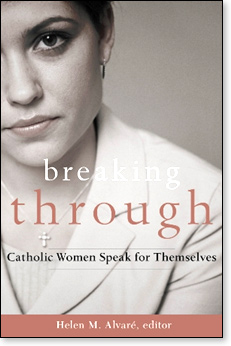
Breaking Through: Catholic Women Speak for Themselves edited by Helen Alvare. In the face of a media culture that paints religious people as bigoted or brainwashed, Catholic women are being called to tell their own stories—to explain why their faith brings them not oppression but peace, hope, happiness and joy. This is a book of such stories.

Bad Religion by Ross Douthat. So, I'm kind of biased on this one because Ross is my very favorite writer and I kind of want to be him when I grow up. I've met him and heard him speak, and in this book, he gets American culture and religion spot-on. It's incredible how he sees straight to the heart of an issue (in this case religion) and explains it in flawless prose. *Sigh* I'll try not to swoon...

The Road to Freedom by Arthur Brooks. I didn't used to be interested in economics but this book changed my mind. Brooks makes a great case for free but responsible enterprise and how it helps every one of us. It's a great introduction to economics if you're not familiar but want to learn more.

Jesus of Nazareth: The Infancy Narratives by Pope Benedict XVI. Pretty much anything the Pope writes is pure gold. This is the third and final volume in his Jesus of Nazareth series and it focuses on Christ's birth and childhood—perfect for this time of year.

Advice

Source
The Jane Austen Guide to Happily Ever After by Elizabeth Kantor. Have I talked about this book yet? It was great. I must have said a hundred times while reading it, "I wish someone had given me this book in high school!" It's chock-full of wisdom and I'm buying a copy for every teenage girl I know (seriously—it's an easy Christmas present for Jenna, and I gave one to Caroline already!).

The Temperament God Gave Your Kids by Art and Laraine Bennett. When I recommend this book, I'm actually recommending the whole Temperament God Gave You collection. I learned about the classic "four temperaments" pretty recently and found these books so helpful. The philosophy is fascinating and the temperaments system is a great way to understand other people.

Philosophy

Adam and Eve after the Pill by Mary Eberstadt. In it, the "intimidatingly intelligent" Eberstadt takes on the sexual revolution and lays out what it has done to our society. Again, haven't read it yet (I know... lame...) but I've heard the author and others speak on it and it's high on the to-read list. 

On the Unseriousness Of Human Affairs by Father Schall. I haven't actually read this yet (although I'm looking forward to it) but Father Schall is The Man and his last lecture made me cry. I've heard this is his best work yet.

For the Kids

Source
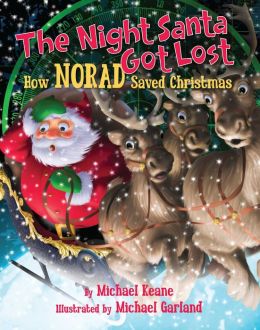
The Night Santa Got Lost: How NORAD Saved Christmas by Michael Keane. Do you know the NORAD Santa Christmas story? It's absolutely darling. Here's the account on their website:
The tradition began in 1955 after a Colorado Springs-based Sears Roebuck & Co. advertisement misprinted the telephone number for children to call Santa. Instead of reaching Santa, the phone number put kids through to the CONAD Commander-in-Chief's operations "hotline." The Director of Operations at the time, Colonel Harry Shoup, had his staff check the radar for indications of Santa making his way south from the North Pole. Children who called were given updates on his location, and a tradition was born.
Isn't that sweet? I love the origins of that tradition and would love this book for my little siblings. I think it would go over especially well with more science-minded kids.

Source
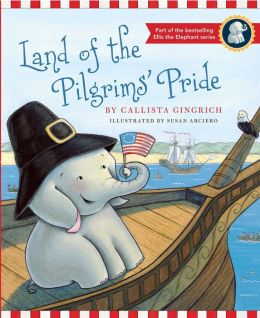
Land of the Pilgrim's Pride by Callista Gingrich. The second of the Ellis the Elephant series, this book is filled with whimsical illustrations and gentle rhymes that introduce little ones to America's founding colonies. A very sweet book to inspire children with patriotism.


That wraps up my "Best Books of 2012" list! What others would you recommend?

Also, please feel free to join my Christmas decorations link-up... yes, it's way after Christmas... procrastinators unite! ;)


Note: I'm not getting any compensation for recommending these; I just think they're awesome!

Friday, November 16, 2012

Extreme Levels of Excitement!


This book, my friends.

This book.

It was one of the first books I worked on from start to finish at my new job, and yesterday, we got the paperback copies in to the office. Aren't they beautiful? (seriously... how much do you love that cover??). I started squeaking with excitement when I saw it, making all the Publicity people laugh.

You can't imagine what it was like editing this baby. I'm not a military history fan and this book is 689 looooong pages of gory, extensive, exhaustive details about the Civil War. But I got through it! And the author (bless him) even complimented my work when it was done.

I couldn't be more proud and excited to be holding this book in my hands. Dad's Christmas present? Probably. And hey, if you know a military history fan in your life, buy him this book... you won't regret it. I promise. Plus it has my name in the Acknowledgements, so if you're really really desperate to know my last name, this is obviously the cheapest, fastest, and easiest way for you to find out. ;)

Oh man. What can I say? I love my job.

(p.s. One of my co-workers sent me this blog... at first I was like "this is my life!!" but then I was like "actually my life is nowhere near that glamorous" ... bottom of the publishing house totem pole right here. But this one really is my life and that makes it all awesome!)

Friday, January 13, 2012

Job Perk

Father Schall's lecture last night was great. He is a fount of knowledge and wisdom, and also of book recommendations, as he urged many titles on us. He particularly recommended Ten Universal Principles by Robert Spitzer, calling Spitzer, a fellow Jesuit priest, "one of the finest minds in the Society."

After the lecture, Laura, her older brother Joe, Serena, Frank and I went to dinner. Frank and Joe got along like a house on fire. They were arguing politics and comparing drink recommendations in no time. I was amazed, and impressed with Frank. Then Laura and I went home and sat on the couch chatting with Sarah until 1 am. Lillian called at one point and we put her on speakerphone to join in the fun.

This morning I got to work and found a large package with my name on it in my office mailbox. I remembered that last week I wrote a letter to Ignatius asking if I could review some of their books. I ripped open the box and was overjoyed to find The Father's Tale, Extreme Makeover, Mother Teresa of Calcutta and, yes, even Ten Universal Principles. I couldn't believe it!

I think today is shaping up to be a very lucky day indeed.

By the way, some of you may know that I also blog for The Catholic Young Woman. My latest post has inspired quite a discussion in the comments section. I'd be honored if you would read it and give me your opinion!

Wednesday, January 4, 2012

How to Read Brideshead Revisited

If you've read this blog for any time at all, you've heard me rhapsodize about Brideshead Revisited. It's one of my all-time favorite novels. I think it's one of the most beautiful books ever written and ranks high on the list of great Catholic works.

However, I have a confession to make. The first time I read it, I didn't like it. Nope, not one bit.


You see, Brideshead Revisited is a difficult book in a lot of ways. For one thing, it's tragic. For another, it has a lot of questionable moral content that makes it unsuitable for a younger audience. Finally, its appeal for Catholics is very subtle, and you might miss it if you're not playing close attention. I missed most of it my first time around.

The thing is, Evelyn Waugh wasn't writing for the casual reader. Waugh was a master literary stylist whose eloquence with the English language was nearly unrivaled. Furthermore, he really "got" human nature and depicted his characters very realistically, in all the complexity of their sins and prejudices and sillinesses. As his greatest work, Brideshead Revisited needs time, patience, and close attention to be really understood.

On top of that, there is no traditional happy ending in Brideshead Revisited. There are no unequivocally "good" characters, and in fact there are very few likable ones. Everyone in the story is deeply flawed, or else a little flat. Everyone makes really awful mistakes and most of the characters suffer deeply. There is a lot of beauty, but there is also a good share of ugliness and a lot of sorrow.


If you prefer clear-cut "good"/"bad" characters and obviously happy endings - and I don't blame you if you do, I often do myself - you might have a hard time liking Brideshead Revisited.

If, however, you are up for reading what Father Robert Barron calls "the best Catholic novel of the twentieth century," here is my unofficial and non-academic guide on how to get the most you can out of it.

1. The first step is to set the scene for the chapters on Oxford, in the first half of the book. Read a little about Oxford's Mercury Fountain and the Bullingdon Club for context.

Those Wikipedia pages are shockingly lacking in the juicy details, by the way. The Mercury Fountain has a small statue of the god Mercury in the center of it (no surprise) which the occasional Oxford undergraduate tries to pull down when inebriated. It has been pulled down three times, and legend has it that each man who got it down went on to become Prime Minister of England.


Despite the threat of a heavy fine, Oxford students still regularly jump in Mercury when drunk and have a go at downing old Mercury. As the statue is now welded to its base, however, this feat is a lot more difficult than it was in years past, and I don't know anyone who has succeeded (although I do know someone who cut his foot on the pedestal while attempting to ensure his future career as Prime Minister. Shhh, don't tell!).

Also, the Bullingdon Club is the most ridiculously exclusive group in British undergraduate life, and probably in the world.

Among other things, they are notorious for destroying restaurants/hotels/clubs that they party in. They leave the place an absolute wreck and then pay the damages, which as Wikipedia accurately notes, makes it "prohibitively expensive" to join.

Of course, being in Bullingdon pretty much guarantees that you'll eventually become Mayor of London or Prime Minister of England. Members of the Bullingdon Club excel at getting into positions of power.

They also excel at sitting around the place looking pensive in fabulous waistcoats.

2. Having set the scene for the Oxford portion of the novel, my next recommendation is that you read the chapter on Brideshead Revisited in George Weigel's excellent book Letters to a Young Catholic (most of that chapter is available online).


Warning: the chapter contains plot spoilers. So you may prefer to wait until after you've read the book to read it. But it offers a great philosophical explanation of Brideshead, so I recommend reading it first as a framework for understanding the book properly.

3. My final recommendation is about the way you ought to approach the story. Ultimately, the main actor in Brideshead Revisited isn't actually any of the human characters; it's Divine Providence itself. The book is essentially an extended exploration of how God's grace works - slowly, subtly, and very strangely - on one dysfunctional British Catholic family. It's brilliant and beautiful, and completely imperceptible to non-Catholics, who will absurdly claim that the book is actually about the First World War or something similarly inconsequential to the plot.

As a side note, if you can, try to read it slowly and really savor the language. Waugh wrote so beautifully! It blows me away sometimes. Even some tiny passages, such as the description of a certain wine drunk at dinner in Paris, are evocative, powerful, eloquent, haunting. What Waugh did with the English language was no small feat. I can only dream of someday writing half as well as he did.

Finally, make sure you read the epilogue, and especially the final few paragraphs. They gently convey the point and theme of the entire book.

Anyway, a lot of people whose opinions I respect don't like Brideshead at all, and I can see that their criticisms are valid. It's difficult to relate to many of the characters. The book is sad, sometimes awfully so, and a lot of characters play fast and loose with morality. It's certainly not for everyone.

Perhaps, like me, you really won't like it the first time you read it. In that case, please wait a few months, or even years, and try it again. It worked for me. Perhaps it will work for you too.

And then, please come back and tell me what you think about it.


Special thanks to Brandon, whose question inspired this post.

Also, here is a lovely little reflection on Brideshead Revisited and Catholicism by my sister, Lillian.

Thursday, January 6, 2011

A Severe Mercy, A Review

I'm reviewing A Severe Mercy by Sheldon Vanauken today for my Christmas break book club. To begin with, I've composed a little quiz for you to decide if you would like A Severe Mercy.

Do you like...

A) Love stories?
B) Oxford?
C) Poetry?
D) C.S. Lewis?
E) All of the above?

If you said "Yes" to any of the above... run, don't walk, to the nearest library, bookstore or Amazon.com to get your hands on a copy of this marvelous book. 

A Severe Mercy is not a love story, strictly speaking, but rather an autobiography of a love between a man and woman. The book begins with Sheldon (nicknamed "Van") remembering his youth with Davy as he walks near his childhood home. He goes on to tell the story of his relationship with Jean Davis (called "Davy"), from their first meeting to their early marriage and through all the years of their relationship. Their adventures range from the horrific, as when they witness the Japanese attack on Pearl Harbor, to the magical, as they spend years living on a boat off the Florida Keys or in the Virginia countryside. They go to study at Oxford, where they encounter the works of C.S. Lewis and eventually meet the man himself. Their relationship with him slowly transforms their "pagan love" as they seek the truth that leads them to Christianity. When they learn that Davy is ill, however, they will need to rely on all the strength of their love, intellectual life and Christian faith to make it through this great trial.


One thing that makes this book exceptional is that it's about a love story but written from a man's perspective. Another is that it's entirely true; Van and Davy kept thorough diaries of their life together, and Van draws heavily from them in writing his book. If you've read Brideshead Revisited, you will probably enjoy A Severe Mercy; both books share descriptions of golden summer afternoons, the vibrant life of the mind at Oxford and accounts of deep human love. The later parts of the book are very analytical, almost philosophical, in nature as Van describes what he learned through his love for Davy. These parts are still very interesting, however, thanks to Van's personal stories that keep the book relatable.

This is not a book for someone interested in a light, Nicholas Sparks-style love story. This is not a book for those who are bored by the classics or poetry. This is a book written for those who want to understand what human love is, and the way that God can transform human love into something beyond the imagining of those participating in it. It's a beautiful book, I loved it, and to the type of people who read my blog, I can't recommend it highly enough.

Tuesday, January 4, 2011

Mere Christianity, An Excellent Review

When I started my Christmas vacation "book club," what I really wanted was to discuss books I love with intelligent, interesting people whose opinions I respect. In addition to the "official" books I listed in the original post, I also went around handing out copies of my favorite books like they were candy on Halloween, in the hopes that a fruitful dialogue with my friends would result. I haven't been disappointed. The first of my friends to get back to me with his book review read "Mere Christianity" instead of any of the books on the list, so I'm making it the first featured book of my reviews, even though it's strictly speaking not a "book club" book. I say, so what? His review is brilliant. If you can't throw in random book reviews and brag shamelessly about your friends, what's the point of having a blog anyway? 

To give a little background, Joey is a PLS major with me. We've been friends since our early days in PLS and we studied abroad in London together; you'll find him plastered all over the Spring 2010 archives of this blog. Joey's the best fiction writer I know and is currently completing his first novel. He's also the most practical person I know, which comes out pretty strongly in this review. Without further ado, I present to you...

A Review of Mere Christianity by Joey K.

First of all, in judging the book one has to take into account what the book was meant to be. Lewis plainly states that the intention of Mere Christianity is to explain what all Christians believe, regardless of denomination, and to defend those beliefs. The book is taken from a series of talks given on the radio, and as such, the intended audience of the book is the general public. Thus, the book is meant to be immediately accessible to any reasonably educated adult, and as a result, it is not supposed to contain any high philosophy or anything that would require specialized knowledge. That being said, the book penetrates much deeper into Christianity than you see in the common practice of most churches and congregations.

I thought the weakest part of the book was the beginning, in which Lewis attempts to establish the truth (or at least the probability) of theism as against atheism. His arguments here seemed to fall a little flat, or he seemed to be simply ignoring the counterarguments. His basic argument seemed to be that, because we have an ineradicable sense of morality, morality itself must be Real, not just a projection of our minds. This doesn't quite answer the possibility that we have simply evolved a strong sense of morality out of necessity for the survival of our species. I was somewhat disappointed here; I thought that a Lewis would have very strong arguments against atheism because he converted to Christianity from atheism. Of course, it makes sense that the beginning of his argument would be the weakest part, because the first things in science, philosophy, or theology are necessarily the most obscure and difficult things. These first principles require difficult metaphysical reasoning. This goes back to what I said in the paragraph above. It is very possible that Lewis could have produced a better metaphysical argument, but that he refrained from doing so in order to keep the book simple and accessible to the average person. The next weakest part was the next step, in which Lewis attempts to establish the Judeo-Christian conception of God as against different notions, such as an immanent but impersonal Life-Force. I am not quite sure Lewis does justice to the different conceptions of the highest reality in other religions. But as the book progresses and gets more and more specific, dealing with practical morality and particular parts of the Christian doctrine, the arguments become more and more compelling and persuasive. So, the result is that if one can only accept the first principles, the results that follow are relatively easy to accept by reason.


I think Mere Christianity would be most useful for anyone who has never really thought deeply about Christianity. To introduce Christianity, the book also introduces the reader to basic philosophy (for the two are inseparable). It seems that the book has the greatest impact on those who have never really thought philosophically about Christianity before, or who have tried to but were simply met by a wall of doubts. (This was probably the case for the Domino's CEO who was so impressed and moved by Mere Christianity that he founded Ave Maria University.) Beyond a certain age, as Lewis points out, one must leave behind superstitious, "babyish" ideas of Christianity. Once a person has the ability to reason, those babyish ideas must either be replaced by more sophisticated ideas or must cause that person to lose faith in Christianity, at least to some degree. It is very hard for a thirty-year-old to believe in Christianity if he still thinks of it primarily as a religion in which some invisible power is watching him all the time in order to punish him for his bad actions and reward him for his good ones. In this light, Christianity looks like an old wives' tale and nothing more. But Lewis does a great job explaining how Christianity does not consist mainly in reward and punishment, but in a spiritual learning curve, in which all people are called to become "sons of God," making them fit for eternal life with God. I might give this book to my little sister who is in eighth grade and will be making her Confirmation soon. I am not sure if it might not be still a bit over her head, but I'd rather give her a challenge than underestimate her intelligence.

My education in Notre Dame's Program of Liberal Studies has given me the opportunity to meditate deeply on spiritual matters and the truth of Christianity, and by reading the Great Books I have already been exposed to arguments for and against Christianity from most of the greatest thinkers of history. Because of this, I often felt like Lewis was telling me what I already knew. Nevertheless, even the most educated persons need to constantly be reminded of these things, so they might not grow complacent and lazy in their ideas. And Lewis has a knack for putting new twists on old ideas, giving one clever new images with which to hold onto those ideas. Lewis's genius is his ability to communicate profound ideas in simple terms, usually using metaphors and anecdotes from everyday life. Because of this, the book still holds value for those who are highly versed in Christianity, not just for beginners. I found the book enjoyable mainly because there were a number of times when I paused and thought, "Huh. I've never thought of it like that before." Even though I already knew most, if not all, of the actual Christian doctrine contained in the book, the book still had power as a rhetorically persuasive argument. Reading it made me want to be a better Christian, and gave me many practical tips as to how I should go about doing so. For the same reason, I would consider giving or recommending this book to any of my family or my friends. Even though it would probably not convert anyone who holds different religious beliefs or is an atheist, the book would probably give those people a better understanding of Christianity, and might even move them to strive harder for virtue in their own lives.

Thursday, December 23, 2010

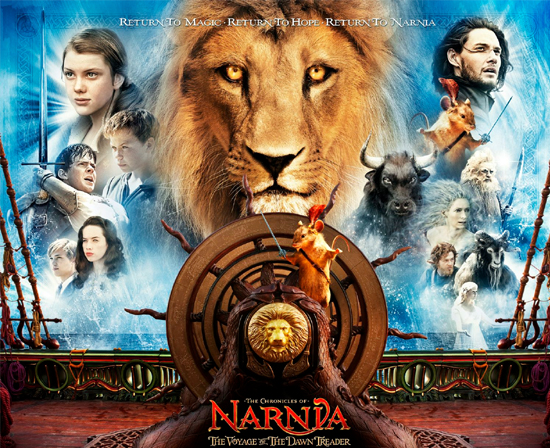
Lazy Thursday; or, The Chronic-what-cles of Narnia

The National Shrine of St. Therese of Lisieux is 15 minutes from my house, and this morning, my mom plus 4/7 of her offspring hit up the shrine's chapel for 11:30 Mass. This shrine and I have a long history together. Some of my earliest memories including frolicking on the 50-acre Carmelite estate, rooting about amongst the shrubbery with my sisters while my mom and her friends made a Rosary pilgrimage. Good times. Today's visit to the shrine was especially meaningful because in the months since my last visit, I studied St. Therese in Theology class, so I appreciated afresh the chance to scope out her personal belongings and relics in the attached museum. Of course I was the picture of decorum... until Lillian and I found the chair that Therese sat on to write Story of A Soul. We took a quick peek around and then reached out with one accord, past the velvet rope, to touch her seat. Oooh scandalous! When we were little, we used to touch all the statues. I don't know how we're still allowed in that place.

Mum ran some errands after that - I hid out in the car reading The Four Loves while she gathered groceries - but she hurt her leg on the cart and was weary by the time we got home. Some peace and quiet were in order for her, I thought, so I went through the house proclaiming, "I'm going to see Narnia! Who wants to come?" Soon I had corralled 3 of the little kids, plus Lillian, and the 5 of us set off on the perilous journey to the movie theater (perilous because it was icy, plus we accidentally left the Google-mapped directions at home). For some reason, nobody appreciated me singing about the Chronic-what-cles of Narnia to get us all in the Narnian mood and take our minds off the fact that we were lost. But in the end we were only 4 minutes late for the movie (not bad for us) and we all had a great time, except Angela, poor baby, who spent half the movie hiding her head in my lap. Sea serpents and sensitive 6-year-olds don't mix well, it seems.


I need to explain that I have read The Chronicles of Narnia approximately four million times, and The Voyage of the Dawn Treader used to be my favorite of the series. So the thought of seeing it on screen for the first time (other than that disastrous 1989 attempt that I endured - and laughed at - as a child) was exciting but a little scary. What if they make Edmund and Caspian fight over Ramandu's daughter? What if they censor out Eustace's draconian transformation? I was prepared to become hostile and leave in a huff.

Instead, I found myself fighting back tears the whole time, often unsuccessfully. I used to live and breathe Narnia. Lillian and I played Narnia every single day, and tyrannized Cathy and Maria into being Peter and Edmund (we were always such thoughtful big sisters). My third grade teacher called Lillian and me "Narnian princesses" (mind you, this was the same woman who acquiesced to my request to be called Princess Leia for 3 months). Seeing my childhood dreams... a huge part of my world... right up on the screen in front of me, live and in 3D, was a lot for my heart to handle. If they had yelled, "For Aslan! For Narnia!" one more time, I would have been a weeping mess. As it was, I got away with just enough tears that my 8-year-old brother will be making fun of me for the rest of the week. Awesome.

On that note, Merry Christmas!

Sunday, December 12, 2010

Public Service Announcement


 My dear friend and kindred spirit Theresa visited me on Wednesday for Mass on the Feast of the Immaculate Conception. After Mass, she, Ginny and Shannon crowded into my little room for a long, feminine chat about faith and our dreams for the future. I told Theresa that I'm really interested in what it means to be a woman - the unique privileges and responsibilities of our divine feminine role - so I'm reading a bunch of books over Christmas vacation to study and learn more about it. Theresa loved that idea so much that she decided to join in too. Together we're reading A Severe Mercy, Privilege of Being A Woman, Captivating and Story of a Soul.

I had ordered these books before talking to Theresa, and since A Severe Mercy arrived over Thanksgiving, I've been slowly reading it over the past week as a study break. This morning I sat in bed for over an hour reading the penultimate chapters of A Severe Mercy... and weeping. It's a very sad book and very, very beautiful. I loved it so much that I wanted to tell all of you about it... and then I came up with my brilliant idea. This little book club/discussion group doesn't have to just be Theresa and me. I want to invite you all, everyone reading this blog, to join in our club. Buy one (or all) of these books over Christmas and read them with us. I'll post a review of each book as I finish it, and you can post your ideas about the book in the comments. When you and I meet in person (and I think I know almost everyone who reads this blog personally), we can talk about the books and what we learned from them.

Guys, girls, everyone's welcome. Please take part in Book Smart Girl's first-ever book club. This Christmas, read one or two of these books and then talk to me about what you thought of them. This should be really interesting and a lot of fun. If you're participating, please let me know in the comments. I can't wait to hear from you!

Monday, March 1, 2010

Children's Books are my Life

Here is one of the questions I ask people the most: "What was your favorite book when you were 10?" Some people are excited to answer. Most just go, "Why??"

Here's why: it tells me so much about the person. Every book you read shapes your soul, especially when you are little and your soul is unshaped and impressionable. St. Josemaria Escriva said that "Spiritual reading has made many saints." More to the point, reading has made many people who they are- saints or sinners.

So that is why I ask. I also can tell whether or not I will get along with a person based on their Favorite Books section on Facebook... seriously, it is fool-proof. But that is another story.

This is Paddington Station:
This picture doesn't at all do it justice. It is splendid, an example of magnificent engineering and construction. I loved it from the moment we first met on Saturday morning.

This is Paddington Bear:
His book series is adorable, one of my favorites when I was 5. I was so excited to run into him at Paddington Station, just like in the book.

What was your favorite book when you were 10?

Happy reading, The Book Girl

Sunday, January 10, 2010

A family favorite

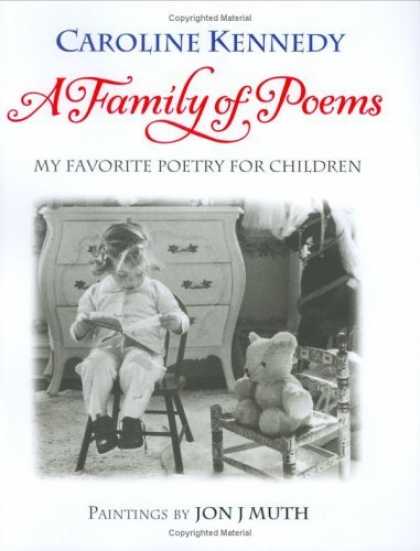
Whenever I am home from college, I read poems to my little siblings at bedtime. Unless I am using my worn copies of Homer, Yeats or Hopkins, I always use just one book:


A Family of Poems, edited by Caroline Kennedy

It is wonderful. The well-chosen selection of poems is neatly divided into sections like "Adventure," "That's So Silly," "Seashore," "About Me" and "Bedtime." The book is filled with gorgeous watercolor illustrations that make the book a delight to look at, especially for little ones who can't read yet.

Angela is getting to be quite the reader and she has a new favorite poem: The Emperor of Ice Cream. I'm not sure why- it's a really weird poem- but I think it's because it has a big picture of an ice cream cone. Tonight she asked me to read it, but when I opened to the page, she noticed something and began to frown.

"This poem has a bad word," she said.

"It does?"

"Yes," she said, leaning in close. "It says dumb."

That made me laugh. Here's to the days when "dumb" was a "really bad word!"

I really enjoyed the conference, by the way- posts on that to come soon.

Tuesday, January 5, 2010

Wodehouse Strikes Again


Last night I read Full Moon by P.G. Wodehouse. I've written before about how funny Wodehouse is. Well, here is my opinion on Full Moon, one of the Blandings Castle series:

I read it in 2 hours and laughed madly the whole time.

There isn't any substance to it. There isn't meant to be. The plot befits one of those screwball comedy movies, complete with many misunderstandings and French-farce-type running in and out of rooms, until at last it all ends happily. And that's the genius of Wodehouse.

Two thumbs up.

As a side note, never trust anyone who spells P.G. Wodehouse's last name "Woodhouse" or who calls Evelyn Waugh a "she." At least that's been my experience. Consider yourself warned.

Sunday, January 3, 2010

The Gospel According to... ?

Well, I am not quite done with book reviews YET. It's nice to look back months later and remember what I thought of a particular book after I read it.

Today's book: The Gospel According to Coco Chanel by Karen Karbo


Cute. Charming. And Ultimately disappointing.

Pros:

1. It's funny and easy to read. The humorous writing style moves briskly and smoothly, so that I had a hard time putting the book down.

2. Quick and comprehensive summary of Chanel's life in a series of memorable images. For example, Karbo writes that "[Chanel's] childhood was the Belle Époque version of a country-and-western song. The only thing she lacked was a dead dog and a wasting disease." Talk about descriptive imagery.

3. The text is cleverly designed, mixing biography with pithy pointers on how to do things the Chanel way.

Cons:

1. Karbo inserted FAR too much of her own personal opinions. This book often seemed to be Karbo's own autobiography rather than a biography of Chanel.

2. The book relied on current events and silly modern phrases or trends to explain a lot of things about Chanel and her life. In other words, it will quickly be dated. Unlike Chanel's creations, this book is not timeless.

3. I lost all respect for this book on page 123, when Karbo referred to Chanel and one of her major competitors as "frenemies." What is this, People magazine? Please give your subject a little more respect than that.

The Bottom Line: Skip it- unless you are at the beach. There are dozens of Chanel biographies that are actually, you know, biographies. This, on the other hand, was an engaging but fluffy book that offered maximum readability with minimal substance. Try an older Chanel biography instead, and leave Karbo to her self-aggrandizing ways. Then again, this is just light and silly enough of a book to make pretty good beach reading.

Monday, December 28, 2009

Babies + "The Help"


This picture doesn't have much to do with this post. I just love it and wanted to post it. That is my little sister (R) with two of our cousins who are just her age, and they are the best of friends.

Today I am reviewing a book called The Help, by Kathryn Stockett.


Coincidentally, it is about women who raise babies- colored* maids who raise white women's babies in the South in the 1960s. The story is told from the perspectives of three women: an elderly maid who is (mostly) resigned to a life of obedience, a sassy younger maid who can't keep a job because she refuses to take her employers' injustice in silence, and a young white wannabe journalist who interviews them for a book she dreams of publishing. The book tells the story of these three women and the three white women the maids work for, plus a huge number of family members and friends.

This book deals with social prejudice, racial injustice and cruelty, and just about every human emotion under the sun. It spent part of this year on the New York Times bestseller list and it's been talked about a lot because of its difficult themes.

Pros:

1. The story traces the lives of six women (and a host of other people) yet it rarely gets confusing. The length of the book allows for a slow unfolding of secrets.

2. The book captures your attention and keeps it. It hints and hints at coming revelations- sometimes it hits you over the head with how little you know- until finally, at the very end, it reveals the secret.

3. It's a wonderfully thoughtful work- the author clearly did insane amounts of research and crafted the story with artistry and commitment. The plot is intelligent, has great structure, and presents a worn theme in a fresh way.

Cons:

1. Much of the book is told in a folksy, down-home tone, along the lines of "I could a tole him he'd ketch his death of cold." Boy, does this get annoying after a couple dozen pages. The book would have been much improved if it had dropped the exaggerated Southern dialect.

2. The morality in this book can be pretty questionable. The basic struggle against racism is commendable and is portrayed well, but a number of smaller issues seem downright fishy. For example, the book implies that modest dress means you're repressed and it caters to stereotypes of the hard-bitten, multiple-divorced career woman. How about a working woman with a happy love life for a change?

3. Overall, it's just sort of... flat. The secrets are dragged out for too long. There are way too many scenes of people sitting around having tea. It's a good beach read and worth some discussion, but most of what it has to say has been said before.

Verdict: Skip it. Read To Kill A Mockingbird instead- twice the substance with half the twang and none of the boring bridge parties.


*Note: I apologize if the term "colored" is offensive. It is the word used in the book so I used it here. If anyone is offended by it, I would be happy to change it- just let me know.

Saturday, December 19, 2009

A little obsessed?


This is my little cousin's bedroom. This is her wall. This is her shrine to Taylor Lautner, also known as Jacob Black for those of you in the Twilight fan club.

Not that she likes him or anything.

Of course, she's hardly alone: scores of teenage girls (and their moms) across America are enamored with the Twilight books and its smoldering heroes, Jacob and Edward Cullen.

What is the big deal? Are these books harmless fantasy for girls or should you ban them from your kids' reading list?

Here's the low-down on the series:

Pros:
1. The books have a constant "save sex for marriage" theme, unlike most teen lit (I'm looking at you, Gossip Girl). It's a nice change.

2. The fourth book has a subtle but strong pro-life message.

3. The overall message: Love is hard and sometimes messy, but in the end, love conquers all and marrying your true love will make you happy. Not a bad message at all, right?

Cons:
1. My gosh, is Bella whiny. Could we have a more spineless, helpless, "oh please save me, I'm a damsel in distress" heroine? She is also completely wrapped up in her boyfriend, making him the center of her life, to the exclusion of her family. Bella is not the kind of girl you want your daughter to be.

2. A leetle too much sexual stuff, especially in the fourth book. They are married at that point, so it's not as bad as it could be, but this is still too much for kids younger than 7th or 8th grade.

3. They're just not very well-written. I think the best description of Stephenie Meyer's prose is "pillowy." You could tell the same exact story in a quarter of the words- and with far fewer angst-y descriptions of Bella's melodramatic moods.

The Bottom Line: They're mostly harmless for girls older than about 7th grade. Stephenie Meyer has a gift for writing stories that uniquely appeal to girls' wants and desires, making these books well-nigh addictive. They're pretty silly books, to be sure, but will do no serious harm. Except possibly to your daughter's bedroom walls.